

.avif)

Running an architecture or engineering firm means making decisions based on more than instinct. It means knowing how your projects are performing, how your team is working, and how your finances are trending. That’s where the right terms and metrics come in.
If your firm tracks the wrong numbers or doesn’t know what to track, it’s hard to manage projects, people, and profit. This list gives you 28 of the most important terms used across A/E firms, organized into categories that reflect how work gets done, plus formulas and industry benchmarks for quick reference.
Use this list as a reference, a training tool, or a way to get your whole team on the same page.
Project & Financial Metrics
Revenue: This is the total income your firm earns from all projects and services. It is the starting point for measuring financial health.
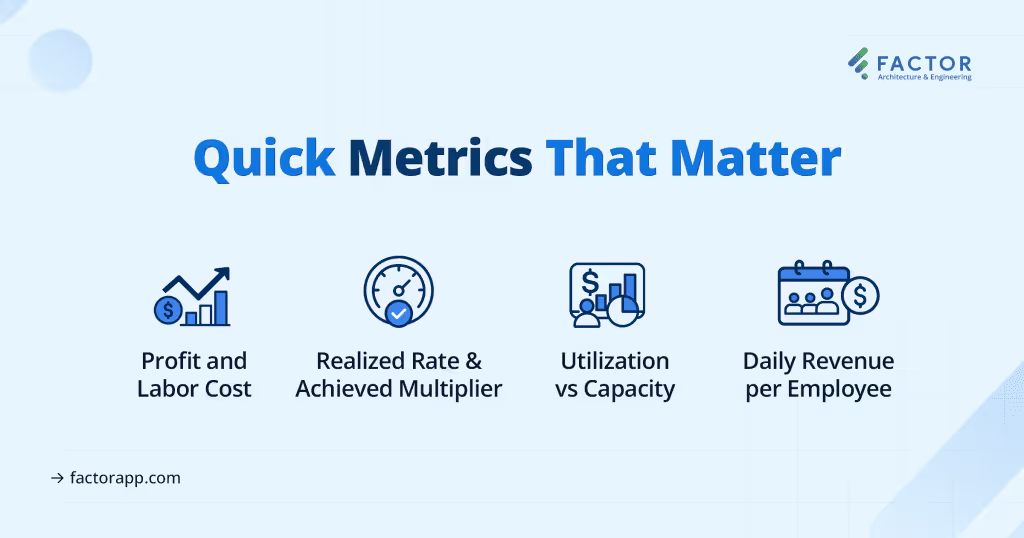
Daily Revenue Per Employee: This shows how much revenue each employee generates per day on average. It helps track productivity across your firm.
Formula: Total Revenue ÷ (Number of Employees × Working Days)
Industry Benchmark: $700-$800 per working day
Daily Revenue Per Direct Employee: Measures average revenue produced by employees doing billable work. A strong indicator of project delivery output.
Formula: Total Revenue ÷ (Number of Direct Employees × Working Days)
Industry Benchmark: $1,200 per working day per direct employee
Actual to Capacity: Compares earned revenue to the firm’s available working hours. This metric is useful for evaluating financial efficiency.
Formula: Earned Income ÷ Total Capacity
Industry Benchmark: 85%
Utilization Rate: Tracks the percent of employee time spent on billable work. A core metric for staff performance and workload balance.
Formula: Billable Hours ÷ Total Available Hours
Industry Benchmark: 80-85%
Realization Rate: Measures how much of your billable time actually gets billed to clients. A key sign of pricing, scope, and project alignment.
Formula: Billed Hours ÷ Billable Hours
Industry Benchmark: 90%
Effective Hourly Rate (EHR): Calculates how much revenue your firm earns for every hour worked. Useful for evaluating pricing and performance.
Formula: Net Revenue ÷ Total Hours Worked
Industry Benchmark: $110-$130/hr firm-wide
Average Hourly Employee Cost: Represents the average daily cost of each employee, including overhead. Helps firms understand true labor cost per hour.
Formula: (Sum of Each Active Employee’s Cost + Overhead Cost for the Day) ÷ Number of Active Employees
Industry Benchmark: $45-$70/hr
Work-in-Progress (WIP): Refers to the value of project work that has been completed but not yet billed. Helps firms recognize earned income in real time.
Industry Benchmark: <1.2
Accounts Receivable (AR): Tracks the total value of outstanding client invoices. Shows how much revenue your firm is still waiting to collect.
Overhead Rate: Tells you how much indirect cost is added to each dollar of direct labor. Helps with pricing, budgeting, and profitability planning.
Formula: Total Overhead Costs ÷ Total Direct Labor
Industry Benchmark: 150-175%
Profit Margin: Shows the percentage of your total revenue that remains as profit after all expenses. A key measure of firm health.
Formula: (Net Profit ÷ Total Revenue) × 100
Industry Benchmark: 8-12%
Break-even Multiplier: Indicates how much you need to bill for each dollar of labor just to cover overhead. Sets your minimum fee target.
Formula: Total Overhead ÷ Direct Labor + 1
Industry Benchmark: 2.3-2.8
Achieved Multiplier: Compares actual project revenue to labor cost. Higher values reflect strong billing and project profitability.
Formula: Net Revenue ÷ Direct Labor Cost
Industry Benchmark: 3
Revenue Forecasting: Estimates how much income your firm expects to earn in the future based on current projects, proposals, and historical data.
Time & Resource Management
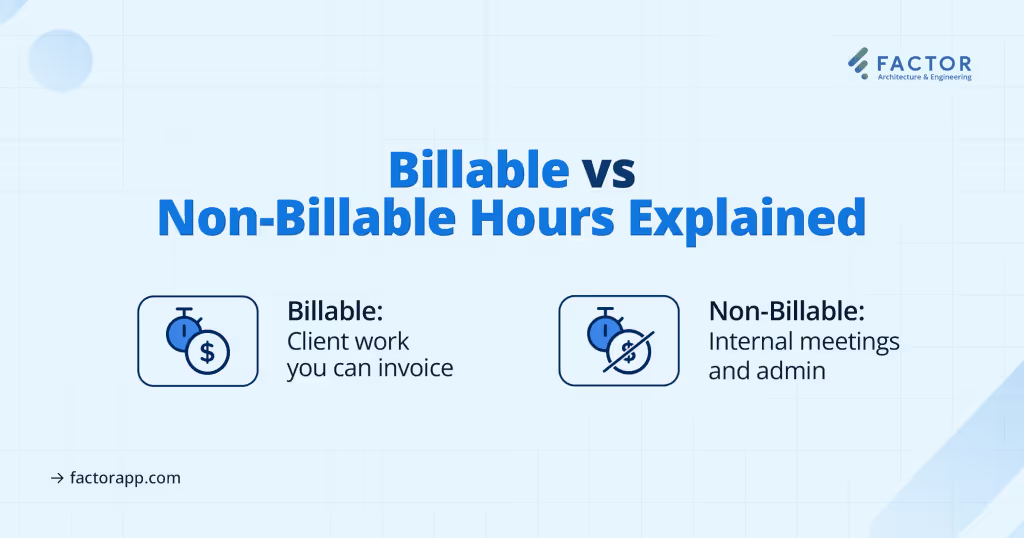
Billable Hours: Tracks the time employees spend on client work that can be invoiced. A key source of revenue for most A/E firms.
Non-Billable Hours: Includes internal meetings, training, and other work not charged to clients. Important for understanding the true team workload.
Capacity: The total number of available working hours across your staff. Used for planning and resource allocation.
Resource Utilization: Measures how much of your team’s available time is booked. Helps balance workloads and improve efficiency.
Scheduled %: Compares scheduled hours to total available hours. Useful for planning and forecasting team availability.
Formula: Scheduled Hours ÷ Capacity Hours
Industry Benchmark: 75-85%
Project Tracking & Invoicing
Phase: A clearly defined part of a project with its own tasks, timeline, and deliverables. Helps teams focus and manage progress in stages. In Factor, billing types are also managed at the phase level so that you can have a mixture of fixed fee, hourly, and non-billable phases all on the same project.
Milestone: A key deadline or checkpoint in a project. Used to measure progress and signal when phases or deliverables are complete.
Fixed Fee: A pricing model where the client is charged a set amount. Encourages efficiency and reduces billing disputes, but can lead to lower profitability if not well-managed.
Hourly Billing: Charges the client based on the number of hours worked. Best for flexible projects with changing scope.
Change Order: A formal update to a project’s scope, timeline, or budget. Ensures changes are documented and approved.
Invoice Schedule: A plan for when invoices are sent, often based on time, milestones, or project phases. Helps maintain predictable cash flow.
Operations & Reporting
Backlog: Represents confirmed work that hasn't started yet. A healthy backlog helps forecast future revenue and team workload.
Resource Allocation: Refers to assigning staff to the right projects at the right time. Balances capacity with project needs and employee utilization targets.
Turn These Terms into Daily Insights With Factor AE
Understanding these terms goes beyond vocabulary and plays a vital role in shaping how your firm operates, measures progress, and makes strategic decisions.
When your whole team understands these metrics, you can plan better, spot problems faster, and work more efficiently.
Factor AE was built around these terms. From time tracking and budgeting to invoicing and resource planning, these numbers are part of every project, every day.
To understand how these metrics come to life within a complete management system, explore how Factor AE integrates them into your daily operations.
Schedule time to chat with a Factor Product Specialist at factorapp.com.

Recommended articles



See Factor in action
In one quick call, we’ll show you a simpler way to run projects and get paid faster.
.png)
“I recommend Factor to other firms. The team is great, it’s easy to use, and it has streamlined my project management. It can do the same for yours.”
Adam Mayberry
Architect / Managing Principal