
Resource scheduling that keeps teams balanced and projects on track.
Check availability at a glance, shift work in seconds, and keep schedules realistic.
.gif)

.png)
.svg)
Communicate assignments clearly.
Assign hours by person at the project or phase level, then let Factor do the rest. Each assignment appears instantly on that person’s timesheet and dashboard, and as they log time, expectations versus actuals update in real time so they can course-correct early.
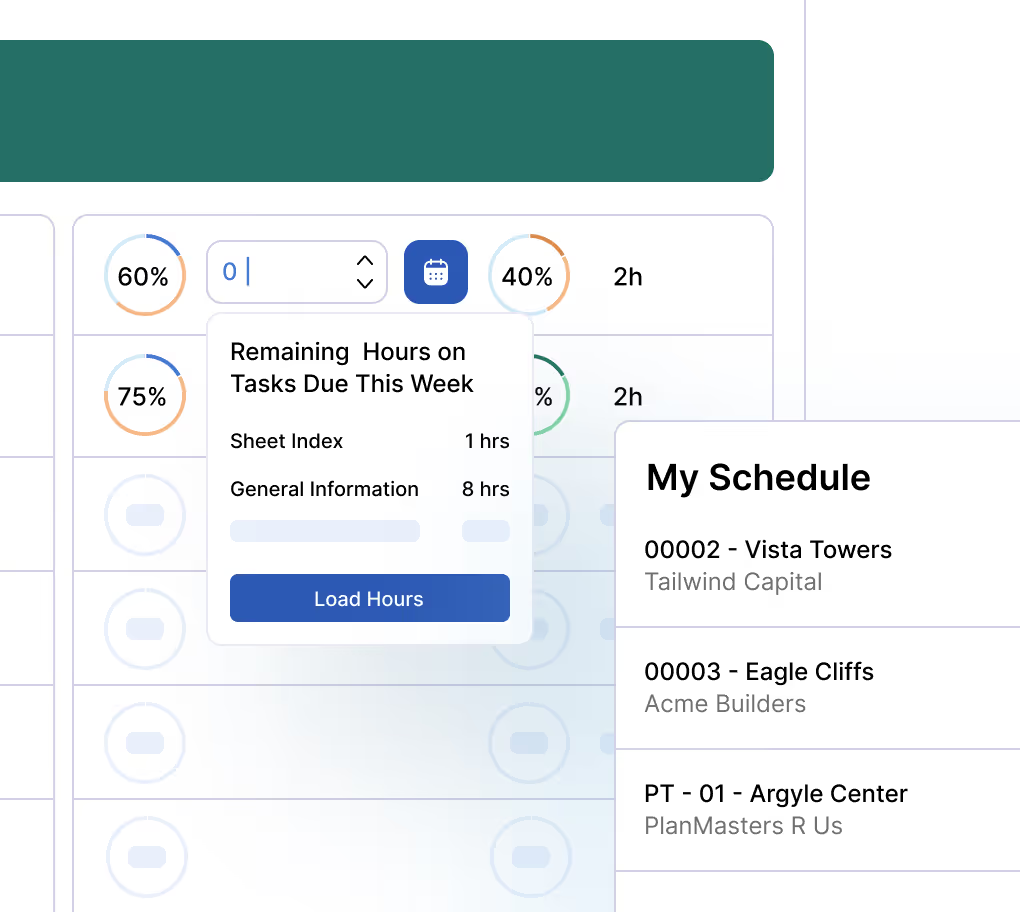
.png)
Easy utilization tracking to prevent burnout.
Set a utilization target for each team member and spot capacity at a glance with simple color codes. Flip between by-person and by-project views to catch overloads and open hours fast.
2026 A&E Industry Benchmark Report
See how architecture and engineering firms are actually performing, with real data across revenue, staffing, project delivery, and financial health, so you know exactly where you stand.

Understand what's driving growth at high-performing A&E firms this year.
Know what your peers are prioritizing at their practice.
Learn what the data says about where A&E firms are winning and where they're struggling.

Balance hours against budgets in real time.
As you schedule your team, the project’s actuals and projected spend update on the spot. The timeline forecasts scheduled revenue and puts it right next to your revenue targets, so you see the dollar impact of every hour and can adjust before costs drift.
.png)
.png)
Shortcuts that make scheduling faster.
Assign tasks and let hours auto-fill from the task details. Schedule weeks at a time, push the plan forward when a project goes on hold, and reassign hours across the team in a few clicks.
Factor’s impact on A&E firms is clear.
All metrics are based on self-reported customer data.
0hrs
saved every invoicing cycle.
000%
user adoption.
<1hr
to bill 30 projects.
1/00th
the price of Deltek.
"I would recommend Factor for anyone in the industry.”
In one quick call, we’ll show you a simpler way to run projects and get paid faster.

“I've worked with software platforms for 20+ years, and Factor has been my best experience of having a platform that will listen to you and is just as invested in us as we are in us.”
Betsy Koch
operations manager


.svg)


