


Selecting the best project management software is a cornerstone of operational efficiency for architecture firms. With countless options available, the decision-making process can be overwhelming and time-consuming. A well-chosen software solution can streamline workflows, enhance collaboration, and drive project success.
To help you through this complex landscape, we've compiled a comprehensive checklist of essential features to consider. By carefully evaluating potential software against these criteria, you can increase your chances of finding the ideal tool to meet your firm's specific needs.

1. Real-Time Budget Status: A Cornerstone of the Best Project Management Software
Accurate and up-to-date budget information is the lifeblood of any successful project. Without a clear understanding of where your project stands financially, it's nearly impossible to make informed decisions, allocate resources effectively, or prevent cost overruns.
A robust project management software should provide a real-time view of budget expenditure across all projects. This includes:
- Clear visualization of budgeted vs. actual costs: Compare planned expenses against real-world spending to identify potential issues early on.
- Detailed breakdown of budget allocations: Understand how funds are distributed across different project phases, tasks, and resources.
- Forecasting capabilities: Predict future spending based on current trends and adjust project plans accordingly.
By having this level of financial transparency, project managers can make data-driven decisions, identify cost-saving opportunities, and ultimately improve project profitability.
2. Timeline Visibility Across Projects: A Holistic View
Understanding the interconnectedness of your projects is essential for effective resource allocation and risk management. The best project management software offers a comprehensive view of project timelines and empowers your team to:
- Identify potential resource conflicts: Easily spot overlapping deadlines and adjust workloads accordingly.
- Rank projects based on deadlines: Focus on critical projects and ensure timely delivery.
- Make informed decisions about resource allocation: Distribute staff effectively across many projects.
- Improve project planning and execution: Gain a clearer picture of your firm's workload.
A well-designed system will allow you to filter and visualize project timelines in various ways, such as Gantt charts or calendar views, to suit different user preferences and project complexities.
3. Resource Scheduling: Optimizing Your Team’s Potential
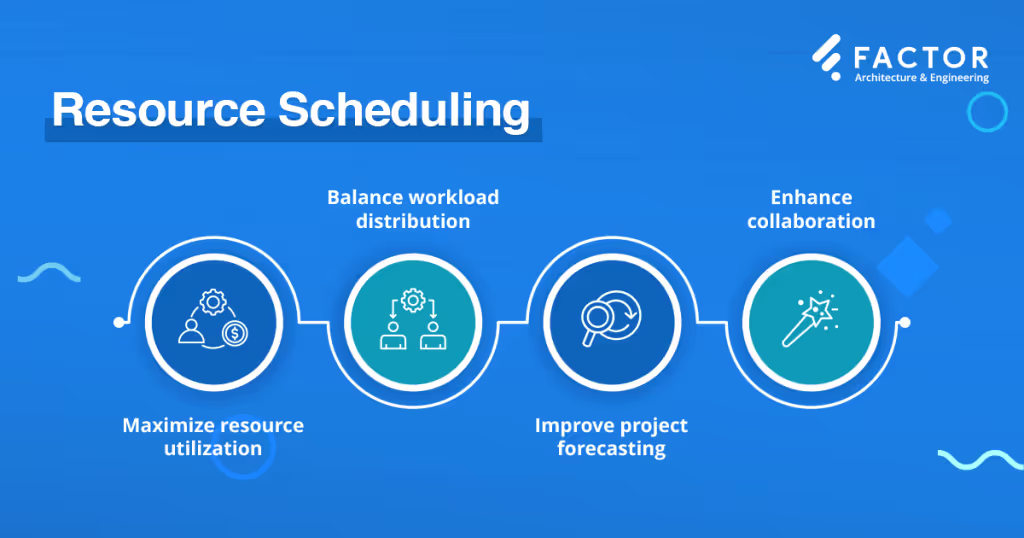
Effective resource allocation is a cornerstone of successful project management. A project management software that excels in resource scheduling enables you to:
- Maximize resource utilization: Ensure that your team members are working at optimal capacity without being overworked or underutilized.
- Balance workload distribution: Prevent burnout and improve employee satisfaction by equally distributing tasks.
- Improve project forecasting: Accurately estimate project timelines and resource requirements.
- Enhance collaboration: Facilitate communication and coordination among team members.
A flexible system that allows you to view resource availability by project or by individual is crucial for making informed scheduling decisions. Features like workload visualization and capacity planning can help you identify potential bottlenecks and adjust resource assignments accordingly.
4. Integration of Phases, Milestones, and Tasks: A Unified Project View
The best project management software should seamlessly connect project phases, milestones, and tasks, providing a clear and comprehensive overview of the project lifecycle. This integration offers several advantages:
- Improved project visibility: Easily track progress at various levels, from high-level phases to granular tasks.
- Enhanced collaboration: Help communication and coordination among team members working on different aspects of the project.
- Accurate forecasting: Predict project timelines and resource requirements more precisely.
- Efficient change management: Quickly assess the impact of changes on project timelines and budgets.
By breaking down projects into manageable phases and milestones, you can create a clear roadmap for your team and ensure that everyone is aligned on project goals and objectives.
5. Earned Value Tracking: A Proactive Approach to Project Management
Earned value management (EVM) is a powerful tool for measuring project performance against the planned budget and schedule. By incorporating EVM into your project management software, you can gain valuable insights into:
- Project health: Identify potential issues early on by comparing planned, actual, and earned value.
- Cost performance: Determine if your project is over or under budget.
- Schedule performance: Assess whether your project is ahead of or behind schedule.
- Forecasting: Predict future project performance and make necessary adjustments.
EVM empowers project managers to make data-driven decisions and take corrective actions before problems escalate.
6. Sub-consultant Billing and Payment Tracking: Streamlining Financial Management
Effectively managing sub-consultant relationships is crucial for project success. The best A/E project management software incorporates robust sub-consultant billing and payment tracking features that can significantly improve your financial operations:
- Improved cash flow: Accurately track sub-consultant invoices and payments to optimize cash flow management.
- Enhanced collaboration: Maintain clear communication with sub-consultants about billing and payment schedules.
- Reduced errors: Cut the risk of payment discrepancies and disputes.
- Better financial reporting: Generate comprehensive financial reports that include sub-consultant costs and revenue.
By centralizing sub-consultant information within your project management software, you can streamline your financial processes and reduce the administrative burden on your team.
7. Revenue Forecasting: Predicting Your Firm’s Financial Future
Accurate revenue forecasting is essential for financial planning, resource allocation, and business growth. A project management software that incorporates robust revenue forecasting capabilities can help you:
- Improve cash flow management: Predict future income to optimize cash flow.
- Make informed business decisions: Divide resources effectively and identify growth opportunities.
- Enhance financial planning: Create accurate budgets and financial projections.
- Track project profitability: Check the financial performance of individual projects.
By leveraging data from your project pipeline and historical performance, you can generate reliable revenue forecasts that inform your strategic planning and decision-making.
8. Separation of Firm and sub-consultant Budgets: Accurate Financial Tracking
To maintain accurate financial control and profitability, it's essential to distinguish between your firm's expenses and those incurred by sub-consultants. The best project management software allows for this separation provides:
- Improved cost control: Track your firm's direct costs and compare them to the project budget.
- Accurate profit margins: Calculate your firm's profit margins by excluding sub-consultant fees.
- Better decision-making: Make informed decisions about resource allocation and pricing based on accurate financial data.
- Enhanced financial reporting: Generate detailed financial reports that clearly separate firm and sub-consultant expenses.
By segregating these costs, you can gain a clearer picture of your firm's financial performance and identify areas for improvement.
9. Visibility into Project Profitability: Driving Business Success
Understanding the profitability of your projects is crucial for making informed business decisions. A project management software that provides clear visibility into project profitability empowers you to:
- Identify profitable projects: Determine which projects are contributing most to your bottom line.
- Optimize resource allocation: Focus resources on high-profitability projects.
- Improve pricing strategies: Adjust project fees based on profitability analysis.
- Enhance risk management: Identify projects with low profitability and take corrective actions.
By tracking project profitability over time, you can gain valuable insights into your firm's performance and make data-driven decisions to improve business profitability.
10. Document Your Project Management Process: Building a Foundation for Success
A well-defined project management process is essential for consistency, efficiency, and improvement. By documenting your process, you can:
- Ensure standardization: Establish clear guidelines for project execution.
- Improve efficiency: Identify and cut bottlenecks in your workflow.
- Enhance collaboration: Foster a shared understanding of project management best practices.
- Facilitate training: Onboard new team members effectively.
- Support continuous improvement: Identify areas for process optimization.
Your project management software should support your process by providing the necessary tools and features. By aligning your software with your documented process, you can maximize its effectiveness and achieve optimal results.
Conclusion
Selecting the best project management software for you is a critical decision that can significantly impact your architecture firm's success. By carefully considering the factors outlined in this checklist, you can identify the software solution that best aligns with your specific needs and goals.
Remember, the ideal software will not only provide the necessary features but also support your firm's unique project management process. By investing time in selecting and implementing the right software, you can streamline operations, improve project performance, and drive overall business growth.
1. What are the key features to look for in project management software for architecture firms?
Key features include real-time budget status, timeline visibility across projects, resource scheduling, integration of phases, milestones, and tasks, as well as sub-consultant billing and payment tracking. Ensuring the software offers comprehensive visibility and control over these elements can significantly enhance project efficiency and profitability.
2. How does project management software enhance financial management within architecture firms?
Good project management software provides tools for accurate and real-time budget management, sub-consultant billing, revenue forecasting, and separation of firm and sub-consultant budgets. These features help firms optimize cash flow, improve financial reporting, and make informed decisions about resource allocation and project pricing.
3. What is earned value management (EVM), and how can it benefit my architecture firm?
Earned Value Management (EVM) is a project management technique that measures project performance against the planned budget and schedule. Incorporating EVM into your software helps in identifying potential issues early, assessing cost and schedule performance, and forecasting future project performance, enabling proactive management and decision-making.
4. How can project management software improve resource allocation and scheduling?
Effective project management software optimizes resource utilization by ensuring team members work at optimal capacity and balances workload distribution. This helps in preventing burnout, improving employee satisfaction, and enhancing overall project planning and execution by allowing managers to make informed decisions on resource distribution based on comprehensive data.
5. Why is documenting the project management process important, and how does software support this?
Documenting your project management process is crucial for maintaining standardization, improving efficiency, and fostering a shared understanding of best practices within the firm. Project management software supports this by aligning with your documented process to ensure consistency, aid in training new team members, and facilitate continuous improvement.

Recommended articles
See Factor in action
In one quick call, we’ll show you a simpler way to run projects and get paid faster.
.png)
“I recommend Factor to other firms. The team is great, it’s easy to use, and it has streamlined my project management. It can do the same for yours.”
Adam Mayberry
Architect / Managing Principal