
.png)

Managing an architecture and engineering (A/E) firm requires more than just delivering high-quality projects. Financial stability is key to long-term success, and revenue forecasting plays a critical role in ensuring profitability. Without an accurate understanding of future income, firms may struggle with cash flow, hiring decisions, and project planning.
Revenue forecasting allows A/E firms to predict earnings based on ongoing projects, market trends, and resource availability. With reliable projections, firms can make informed financial and operational decisions that support growth and stability.
This blog explores the importance of revenue forecasting, the role of resource scheduling, and the best tools to help A/E firms streamline their financial planning.
What is Revenue Forecasting?
Revenue forecasting is the process of predicting future income based on current and past financial data. For A/E firms, this involves analyzing ongoing projects, resource availability, and expected billable hours. Accurate revenue forecasting helps firms anticipate financial outcomes, allocate resources effectively, and maintain profitability.
By understanding projected revenue, firms can:
- Plan for future expenses and investments
- Identify potential cash flow issues before they arise
- Adjust project timelines and staffing levels proactively
- Improve financial decision-making and reduce financial risks
- Ensure the firm has adequate resources for future projects
Why Revenue Forecasting Matters for A/E Firms
Architecture and engineering (A/E) firms operate in a complex environment where managing project budgets, schedules, and resources efficiently is critical. Revenue forecasting helps firms anticipate financial outcomes, optimize resource allocation, and ensure profitability. Without accurate forecasting, firms may struggle with cash flow issues, missed deadlines, and inefficient staffing decisions.
Accurate forecasting also allows firms to:
- Predict slow periods and adjust marketing or hiring efforts accordingly
- Make data-driven decisions on whether to take on new projects or when to start them
- Provide accurate schedules to clients and subconsultants
How to Revenue Forecast?
Effective revenue forecasting requires a systematic approach. Here are the key steps:
1. Analyze Past Financial Data
Review past revenue trends, project profitability, and seasonal patterns to identify recurring cycles.
2. Assess Current Projects
Evaluate the progress of ongoing projects, including deadlines/milestones, remaining billable hours, pending invoices, and client payment schedules.
3. Estimate Future Workload
Consider upcoming projects in the pipeline, contract negotiations, and proposals under review.
4. Account for External Factors
Assess economic conditions, market demand, and industry trends that may affect revenue.
5. Utilize a Forecasting Tool
Leverage software to automate data collection and provide real-time insights, reducing the risk of human error.
The Role of Resource Scheduling in Revenue Forecasting
Optimize Project Planning & Execution
Bottlenecks and missed deadlines can derail projects and hurt profitability. A well-structured resource schedule simplifies project planning by allowing managers to allocate people, projects, hours, and dates in one visual calendar.
With all scheduling data in one place, firms can:
- View the impact of resource allocation on budgeted hours and capacity
- Forecast revenue based on scheduled work and timelines
- Plan hiring needs based on workload distribution
- Ensure projects stay on track and within budget
Balancing Budgets, Scheduling Needs, and Employee Capacity
A/E firms often juggle multiple projects at different stages, requiring efficient resource distribution. A detailed resource schedule provides a clear view of:
- Who is working on what and when
- Each project’s phase schedule
- Employee utilization and capacity in real time
By having this information readily available, firms can assign shared resources effectively, avoiding overallocation or underutilization.
Tracking Time Logged vs. Scheduled Amount
Understanding Workload Distribution
Schedules are useful, but they must align with project budgets. A system that offers a visual representation of actual time logged versus scheduled hours allows firms to:
- Identify overworked or underutilized employees
- Adjust workloads before exceeding project budgets
- Ensure that project timelines remain realistic
Identifying Gaps in Workload
Improving Project Pipeline Visibility
A/E firms must continuously balance ongoing work with incoming projects. A visual resource schedule provides insights into:
- Which employees are most available for upcoming projects
- When new projects can realistically begin
- Whether additional hires are needed to handle future workloads
This visibility prevents work overloads and ensures that projects are scheduled efficiently.
Using Data to Improve Revenue Forecasting
The Connection Between Scheduling and Revenue
Resource scheduling doesn’t just manage workloads—it also informs revenue forecasting. A well-integrated KPI-dashboard displays a future scheduled percentage graph that provides insights into:
- Expected revenue based on scheduled work
- How scheduled capacity aligns with revenue goals
- Whether additional work is needed to meet financial targets
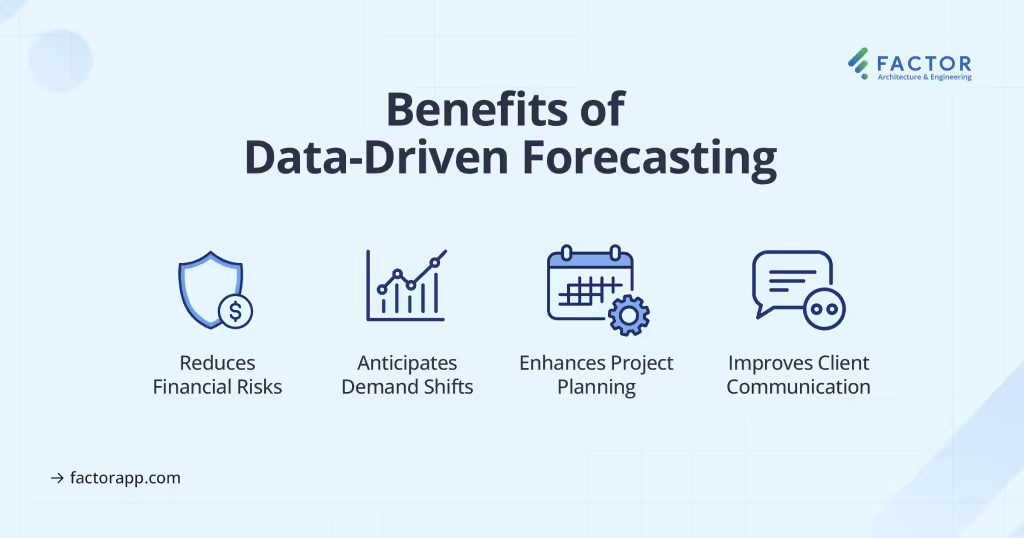
Benefits of Data-Driven Forecasting
- Reduces financial uncertainty
- Helps firms anticipate changes in demand
- Ensures better project planning and execution
- Improves client communication regarding project timelines
How to Choose the Right Tool for Revenue Projections
Selecting the right forecasting tool is essential for accurate projections.
Be sure to consider the following factors:
1. Industry-Specific Features: A/E firms require specialized tools that include project phase tracking, subconsultant management, resource scheduling, and flexible billing options.
2. Real-Time Data Integration: Choose a platform that syncs with accounting and provides interconnected, cohesive data updates across the entire system.
3. Customization and Scalability: The software should adapt to your firm’s size, project types, and evolving business needs.
4. Visual Reporting and Dashboards: Intuitive dashboards help track KPIs, identify trends, and make data-driven decisions quickly.
5. Automation and Predictive Analytics: Advanced forecasting tools use data-driven insights to display patterns and allow you to see potential problems well in advance.
6. User-Friendly Interface: Adopting a forecasting tool is only effective if your team can use it efficiently. Look for an intuitive platform that integrates well with your firm’s workflow.
7. Collaboration and Accessibility: Select a tool that allows multiple team members to access and update forecasting data from different locations, ensuring everyone is on the same page.
How Factor A/E Supports Revenue Forecasting
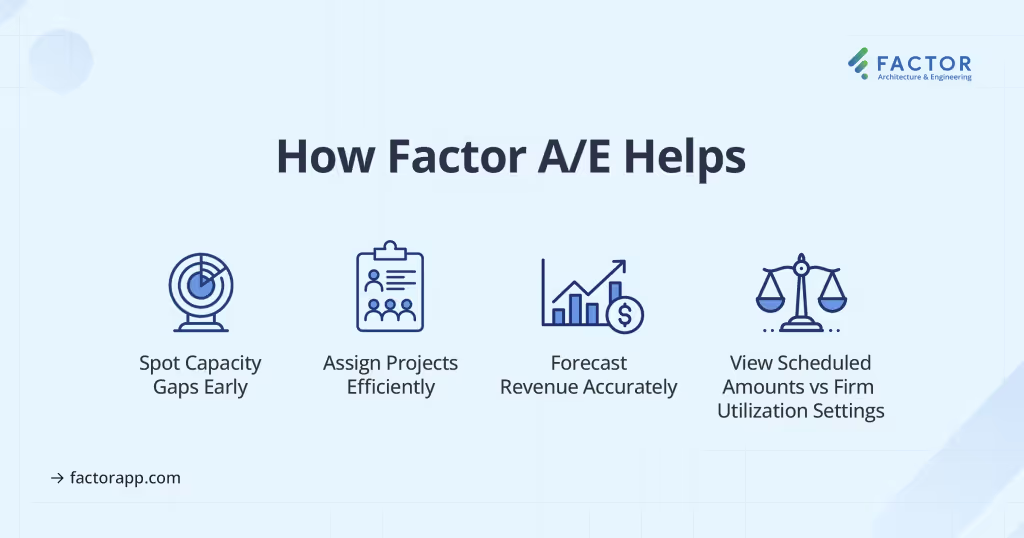
Factor A/E provides tools designed specifically for A/E firms, offering resource scheduling, project tracking, financial forecasting, and more. These features enable firms to stay ahead of potential challenges and make informed business decisions.
With Factor A/E, firms can:
- Assign projects and employee hours efficiently with a visual resource schedule
- Monitor time logged versus scheduled hours to ensure projects remain on budget
- Forecast revenue using real-time data entered at a phase-level on your projects
- Identify capacity gaps and hiring needs before they become critical issues
- Gain access to easy-to-understand reports that improve decision-making
- Integrate financial forecasting with project timelines for more precise revenue projections
Conclusion
Revenue forecasting is a crucial tool for A/E firms seeking to maintain financial health, optimize resource allocation, and grow sustainably. With the right tools, firms can make informed decisions, avoid costly mistakes, and stay ahead in a competitive industry.
By integrating revenue forecasting into daily operations, A/E firms can improve project execution, maintain profitability, and ensure long-term success. The ability to predict revenue fluctuations allows firms to prepare for slow periods, expand at the right time, and maintain financial stability.

Recommended articles


See Factor in action
In one quick call, we’ll show you a simpler way to run projects and get paid faster.
.png)
“I recommend Factor to other firms. The team is great, it’s easy to use, and it has streamlined my project management. It can do the same for yours.”
Adam Mayberry
Architect / Managing Principal